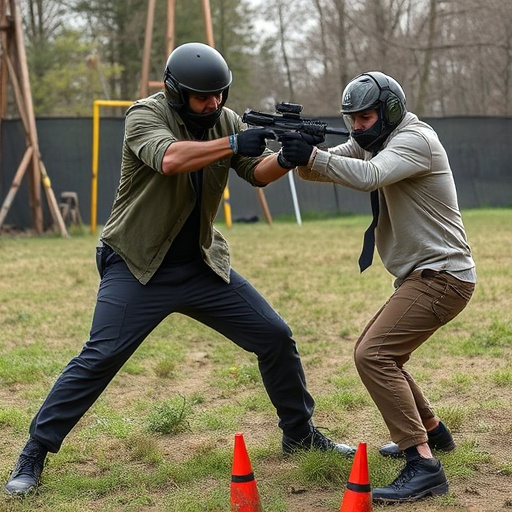
Stun weapons are categorized as projectile (electrical probes) and contact (instant shocks). Projectile weapons offer safe distance for de-escalation, while contact types provide immediate control in close quarters. Legal compliance is crucial due to varying regional restrictions on power outputs, size, and weight. The most powerful legal stun weapons should be chosen based on self-defense needs and local laws.
“In the realm of personal defense, understanding the distinction between projectile and contact stun weapons is paramount. This article navigates the intricate details of these two game-changing options, guiding users toward the most powerful legal stun weapons available. From examining the mechanics behind each type to delving into their power and effectiveness, this comprehensive guide offers insights crucial for informed decisions. By exploring legal considerations and comparing key features, readers will gain a clear understanding of the ideal stun weapon for their needs.”
- Understanding Projectile vs Contact Stun Weapons
- Legal Considerations for Stun Gun Selection
- Comparing Power and Effectiveness: A Deep Dive
Understanding Projectile vs Contact Stun Weapons

Stun weapons are categorized into two primary types based on their operation mechanism: projectile and contact. Projectile stun devices, like tasers or stun guns that fire electrical probes, operate at a distance, delivering an electric shock to the target. This method makes them ideal for self-defense in public spaces where direct physical contact is avoided. On the other hand, contact stun weapons, such as stun batons or hand-held electroshock devices, rely on direct contact with the intended target. These weapons are designed for close-quarters encounters, offering a swift and powerful stun without the need for projectile range.
When considering the most powerful legal stun weapons, both types have their advantages. Projectile weapons provide a safe distance for users, making them suitable for situations where de-escalation is key. Contact weapons, however, offer immediate control over aggressive individuals, especially in close-proximity scenarios. The choice between these two types largely depends on the specific self-defense needs and legal restrictions of the user, ensuring they select a weapon that aligns with their circumstances and complies with local laws regarding stun device usage.
Legal Considerations for Stun Gun Selection
When considering the purchase and selection of a stun weapon, it’s paramount to understand the legal landscape surrounding them varies significantly from one jurisdiction to another. What may be legally acceptable in one region could be strictly prohibited or heavily regulated in another. Therefore, identifying the most powerful legal stun weapons requires meticulous research into local laws.
For instance, many countries and states differentiate between stun guns, tasers, and other electroshock devices, each having its own set of rules and restrictions. Some regions allow only stun guns with specific power outputs while others have size and weight limitations. Understanding these legal nuances is crucial to ensure compliance and avoid potential penalties or criminal charges.
Comparing Power and Effectiveness: A Deep Dive
Comparing power and effectiveness between projectile and contact stun weapons is a crucial aspect in understanding their unique advantages. Projectile stun devices, such as stun guns or tasers, operate by delivering an electric shock from a distance, making them highly effective for self-defense scenarios where maintaining a safe distance is essential. These weapons are known to be some of the most powerful legal stun weapons available, capable of neutralizing individuals with a single well-placed shot.
On the other hand, contact stun weapons, like electroshock batons or stun cuffs, require direct physical contact to deploy their force. While they may not have the same range as projectiles, their effectiveness lies in providing a strong, localized shock that can incapacitate an attacker instantly. This method ensures a more precise and targeted use of force, making it ideal for close-quarters encounters. When considering the most powerful legal stun weapons, both options offer distinct benefits, catering to different user preferences and specific safety requirements.
When selecting a stun device, understanding the distinctions between projectile and contact options is paramount. Each has unique advantages and applications, with legal frameworks varying globally. For those seeking the most powerful legal stun weapons, a thorough evaluation of power output, range, and effectiveness is essential. Ultimately, the ideal choice depends on individual needs, be it for personal safety or professional use, ensuring peace of mind in an unpredictable world.